
"drought tolerant coffee"
200 article(s) found

Environmental requirements for planting small seed Coffee in Yunnan
Based on the natural conditions of Yunnan, coffee planting areas should be selected where the annual average temperature is more than 18 degrees, the coldest monthly average temperature is more than 11.5 degrees, the monthly average temperature is less than 13 degrees within two months, and the extreme lowest temperature is above zero in general.
Coffee tree cultivation requirements for the ecological environment
Arabica coffee is native to the Ethiopian tropical rain forest in northern Africa. The temperature is relatively low, with an average annual temperature of 20 degrees. The origin of medium-sized coffee is near the equator. Therefore, Arabica coffee is more cold-resistant than medium coffee and has a wider adaptability. Medium coffee requires a slightly warmer environment.

Introduction of coffee beans from Arusha Coffee Farm in Tanzania
Corn: mainly cultivated by small farmers, the main planting areas include Arusha, Dorma, Iringa, Mbeya, Ruqua and Rovuma. Production rarely exceeds 3 million tons. Unfavorable climatic conditions are said to be the reason for the low yield. Rice: mainly grown by small farmers, there are also several large-scale rice farms of the National Agriculture and Food Corporation (NAFCO). Big

Introduction to coffee growing technology
Field management loosening weeding: seedling height of 3~6 cm, thinning seedlings, weak seedlings or over-dense seedlings pulled out; seedling height of 10~13 cm when the seedlings, plant spacing of about 30 cm. At the same time of thinning and fixing seedlings, loosen the soil and weed, keep the soil loose. Coffee beans are more drought resistant, soil moisture can be maintained normal growth, dry days, appropriate watering, but in the seedling period for its squatting seedlings should be less
Environmental Requirements of Coffea arabica Cultivation in Yunnan Province
According to Yunnan's natural conditions, coffee planting areas should be selected in areas where the annual average temperature is greater than 18 degrees, the coldest monthly average temperature is greater than 11.5 degrees, the monthly average temperature is less than 13 degrees within two months, and the extreme minimum temperature is generally above zero. Arabica coffee is native to the Ethiopian tropical rain forest in northern Africa. The temperature is relatively low, with an average annual temperature of 20 degrees. Robusta coffee

What does climate change mean for the future of coffee? the hope of coffee F1 hybrid cars
Stamaya. Central America. H1 . These are the names that those who take coffee seriously should know, because mixed varieties may be the coffee of the future. Although there are a large number of special coffee beans today-the familiar coffee includes Allah from Ethiopia, Colombia, Guatemala and other places.

How many varieties of coffee beans are there in the world
There are more than 70 kinds of coffee in the world, of which 3 are mainly cultivated in China. ① small seed species, also known as Arabica coffee, is native to Ethiopia and is cultivated in Taiwan, Fujian, Guangdong, Guangxi, Yunnan and Sichuan. Shrub, 4-6 m tall, with many branches in the basal part; leaves thinly leathery, ovate-lanceolate or lanceolate, entire or undulate, terminal bud green or bronzed, so

How many varieties of coffee beans are there in the world
There are more than 70 kinds of coffee in the world, of which 3 are mainly cultivated in China. ① small seed species, also known as Arabica coffee, is native to Ethiopia and is cultivated in Taiwan, Fujian, Guangdong, Guangxi, Yunnan and Sichuan. Shrub, 4-6 m tall, with many branches in the basal part; leaves thinly leathery, ovate-lanceolate or lanceolate, entire or undulate, terminal bud green or bronzed, so

How about African Ugandan coffee A brief introduction to the varieties of Ugandan coffee beans
Professional coffee knowledge exchange more coffee bean information please follow the coffee workshop (Wechat official account cafe_style) front street-Uganda Coffee introduction if Ethiopia is the birthplace of Arabica small coffee, then Uganda is the hometown of Luodou. During the colonial era, with the encouragement of the British, Uganda began to widely plant low-altitude species in Robsta.

Introduction to coffee planting technology-how to grow coffee trees
Field management of loosening soil and weeding: when the seedling height is 3cm to 6cm, the weak or overdense seedlings are pulled out; when the seedling height is 10cm and 13cm, the plant distance is about 30cm. Soil loosening and weeding were carried out at the same time between seedlings and fixed seedlings to keep the soil loose. Coffee beans are more drought-tolerant, and the soil can grow normally when the soil moisture is maintained. During the drought, the coffee beans should be properly watered, but there should be less squatting seedlings during the seedling fixing period.

Do you know the characteristics of Castillo coffee beans? what kind of coffee beans are iron card round beans?
Professional coffee knowledge exchange more coffee bean information please follow the coffee workshop (Wechat official account cafe_style) Castillo is one of the most characteristic examples of coffee derivatives, but also symbolizes the development of coffee species. Nowadays, many coffee-derived varieties are more or less derived from human intervention and hybrid variation. The main purpose and dream of mankind is to create
Brief introduction of Coffee planting History and planting Technology
In China, according to historical records, coffee trees were planted in Taiwan for the first time in 1884, and coffee cultivation in mainland China began in Yunnan. In 1902, a French missionary named Tian introduced seeds from Yingong, Binchuan County, Yunnan Province. it was successfully planted in a place called Zhu Kula, a tributary of the Jinsha River. The commercial cultivation of coffee in Yunnan began in 1985.

Brief introduction of Coffee planting History and planting Technology
In China, according to historical records, coffee trees were planted in Taiwan for the first time in 1884, and coffee cultivation in mainland China began in Yunnan. In 1902, a French missionary named Tian introduced seeds from Yingong, Binchuan County, Yunnan Province. it was successfully planted in a place called Zhu Kula, a tributary of the Jinsha River. The commercial cultivation of coffee in Yunnan began in 1985.

A brief introduction to Coffee planting History and planting techniques
According to historical records, coffee trees were first planted in Taiwan in 1884, and coffee cultivation in mainland China began in Yunnan. In 1902, a French missionary named Tian introduced seeds from Yinggong County in Binchuan County, Yunnan Province. it was successfully planted in a place called Zhu Kula, which is located on the bank of the Yushan River, a tributary of the Jinsha River. The commercial cultivation of coffee in Yunnan began in 1985, but its development is slow.
To show you the true face of coffee.
Small and round dark brown coffee beans, quietly emitting a fragrant fragrance in the grinder, injected into the cup showing the beautiful color of amber, these are the three very deep impressions of coffee. As you explore the history and beauty of coffee, you can also see the coffee trees that are caressed by the tropical sun and whose leaves twinkle. It has small white flowers similar to jasmine.
Classification of coffee according to Chinese national standards
According to our national standards, the classification of coffee is mainly divided into the following five varieties.
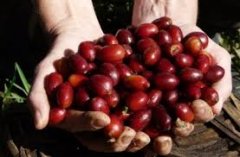
Introduction of Anaka 14Anacafe-14 Coffee Bean study on adaptability of New Coffee Variety
Anaka 14 in 1981, Mr. FranciscoMancham, a producer in the Chiquimula coffee district of Camotn, established a small piece of coffee variety Catimor, brown buds, near the Pacamara plant. Through natural hybridization, we have naturally obtained plants with the characteristics of high vitality, high yield and large grain size. After several selection cycles of more than 30 years, we get

Rayloy Coffee beans from Kuanji Farm, New Caledonia, France
The annual output of this coffee is limited, it is very rare ~ it looks strange ~ the beans are very small ~ very lucky to taste this coffee ~ there is little Chinese information about this coffee ~ I don't know to what extent it is better to roast ~ in the end, it is not deep ~ about 1 minute after the explosion, it stops baking ~ although the beans are very small ~ when grinding beans with a hand grinder

Rayloy Coffee beans from Kuanji Farm, New Caledonia, France
French New Caledonia Kuanji Farm (Rayloy) (KOUANDJI ESTATE Leroy) coffee beans, the price of this coffee is also more expensive, now much higher than Blue Mountain 1. The annual output of this coffee is limited, it is very rare, it looks strange, the beans are very small, it is very lucky to taste this coffee, there is little Chinese information about this coffee, I don't know in the end.

Introduction to the characteristics of coffee flavor and taste of Arusha Coffee Manor in Tanzania with elegant acidity
. Since 1986, it has accepted the adjustment plan of the International Monetary Fund (IMF) and the World Bank, and implemented the three-year economic recovery plan for three consecutive times. The Tanzanian government takes poverty alleviation as the focus of government work, implements the economic reform policy centered on economic restructuring, promotes the process of economic liberalization and privatization of state-owned enterprises, and adheres to moderately tight fiscal and monetary policies to ensure that the national economy